_edited_edited%20(1).png)
What Tax Forms Do Businesses Need to File?

Business tax filing requirements can vary significantly depending on how a company is structured, whether it has employees, and the types of payments or transactions that occurred during the year.
Understanding which tax forms apply to your business is an important part of staying compliant and avoiding missed filing requirements.
Why Business Structure Matters
One of the first factors determining which tax return a business files is its tax classification.
A sole proprietorship, partnership, S corporation, and C corporation can each have different federal filing requirements.
An LLC can also be taxed in several different ways, so simply knowing that a company is an LLC does not necessarily tell you which federal return it needs to file.
What Does a Sole Proprietor File?
A sole proprietor generally reports business income and expenses as part of their individual federal income tax return.
Business activity is commonly reported using Schedule C, which calculates the business's taxable profit or loss.
Self-employment tax and estimated tax requirements may also apply.
What Tax Return Does a Partnership File?
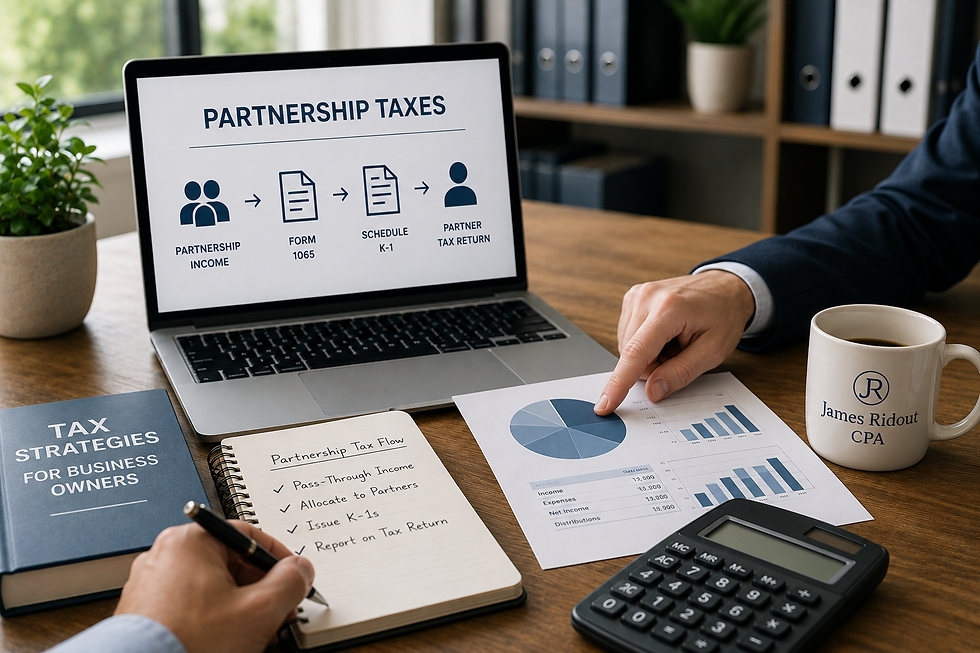
A partnership generally files Form 1065, U.S. Return of Partnership Income.
The partnership reports its income, expenses, deductions, and other tax items on this return.
Each partner generally receives a Schedule K-1 showing their allocated share of partnership tax items for reporting on their own return.
What Does an S Corporation File?
An S corporation generally files Form 1120-S.
Like partnerships, S corporations are generally pass-through entities for federal income tax purposes.
Shareholders typically receive Schedule K-1s reporting their respective shares of business income, deductions, and other tax items.
What Does a C Corporation File?
A C corporation generally files Form 1120, U.S. Corporation Income Tax Return.
Unlike most partnerships and S corporations, C corporations generally pay federal income tax at the corporate level.
Shareholders can potentially have separate tax consequences when profits are distributed as dividends.
What Tax Forms Does an LLC File?
There is no single federal tax return used by every LLC.
Depending on its ownership and tax elections, an LLC might be treated as:
A disregarded entity
A partnership
An S corporation
A C corporation
The appropriate return therefore depends on how the LLC is classified for federal tax purposes.
What Forms Are Required for Employees?
Businesses with employees generally have additional payroll tax filing responsibilities.
These may include forms for reporting wages, federal income tax withholding, Social Security and Medicare taxes, and other employment-related information.
Employees generally receive Form W-2 reporting their annual wages and withholding.
Businesses may also have quarterly and annual payroll filing requirements.
When Are 1099 Forms Required?
Businesses may need to issue information returns for certain payments made during the year.
Depending on the type of payment and recipient, this can include various versions of Form 1099.
Accurate bookkeeping throughout the year makes it easier to identify vendors and other recipients who may require information reporting.
Are State Business Tax Returns Required?
Federal filings are only part of a company's potential tax obligations.
Depending on where the business operates, state and local requirements may include:
State income tax returns
Franchise taxes
Sales tax returns
Payroll filings
Local business taxes
Other business-specific filings
Businesses operating in multiple states can face additional reporting requirements.
What Happens If a Business Files Late?
Late business returns or information filings can potentially result in penalties and interest.
Some penalties can apply even when the business does not ultimately owe income tax.
Preparing early gives business owners more time to gather financial records, resolve bookkeeping issues, and identify all required filings before applicable deadlines.
Preparing for Business Tax Season
Good preparation begins with organized financial records.
Before preparing a business return, owners should generally have accurate records covering:
Business income
Operating expenses
Payroll
Contractor payments
Equipment purchases
Loans and financing
Owner contributions
Owner distributions
Major asset transactions
Keeping these records current throughout the year can make business tax preparation significantly more efficient.
Business Tax Preparation With James Ridout CPA
James Ridout CPA helps businesses understand their filing requirements and prepare accurate federal and state business tax returns.
Whether you operate an LLC, partnership, S corporation, C corporation, or another business structure, our team can help you organize your financial information, identify applicable filing requirements, and stay prepared for tax season.
This article is intended for general informational purposes and should not be considered individualized tax, legal, or financial advice. Filing requirements depend on business structure, activities, location, and applicable tax law.


Comments